Several floors and thick concrete make wireless coverage trickier
Landed homes
One smart home, across every floor.
One well-planned system for your landed home: strong Wi-Fi on every floor, joined-up gates and cameras, and KNX or Home Assistant where it helps.
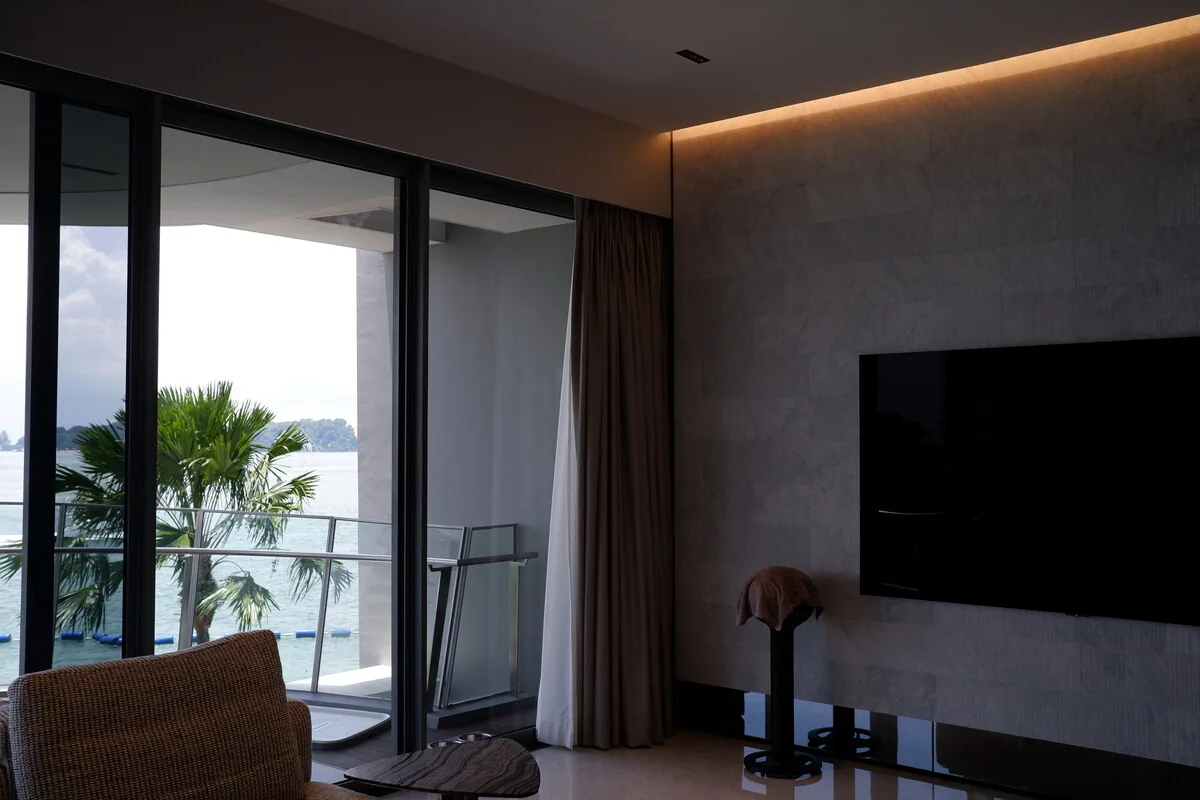 From the PFE project library
Start with the property
Good design begins with the building.
Gates, intercoms, CCTV and outdoor areas involve several different trades
Central aircon and other plant equipment need a proper way to connect
Long renovations go smoother when every change is written down
A few possibilities
Useful changes to everyday life.
A welcoming arrival
The gate, entry lights and aircon in chosen rooms work together, and their normal switches and remotes still work too.
Ready for bed or a day out
One scene can turn off selected lights, close blinds and arm your chosen security sensors around the house.
Everything in one place
See KNX, other brand systems and newer wireless devices together in one simple app.
What makes it work
A few details make all the difference.
- Cable the Wi-Fi access points and key controllers wherever you can
- Plan wireless coverage (Zigbee, Thread and Wi-Fi) for the whole property
- Treat gate, CCTV and intercom equipment as part of your security
- Keep KNX where it’s already doing a solid job
Let KNX and Home Assistant each do what they do best
You don’t need to rip out an existing or planned KNX system to get a modern app and more integrations. KNX, a wired building-control standard, keeps running the dependable basics, while Home Assistant brings everything together and adds well-chosen automations.
We note which system runs what. Your essential lights and aircon shouldn’t hang on a shaky connection just because it looked good in a demo.
Plan the network with the rest of the home
In a landed home, weak Wi-Fi, dropouts and an overworked router show up fast. Plan the access points, cabling, equipment space and your admin logins early, alongside the lighting and curtains.
What shapes the quote
See how pricing worksA quote built around your home.
Your quote depends on the network, how many systems we’re connecting and any KNX, security or building controls you’re keeping. Floor area alone doesn’t tell us how much work your home needs.
Good to know
What homeowners usually ask.
Can Home Assistant integrate with KNX?+
Yes. A KNX/IP interface lets Home Assistant share selected KNX controls and information. We keep it clear which system does what, so you gain features without losing reliability.
Should a landed home rely entirely on wireless devices?+
Usually not. Wired networking and wired controls are still worth it for the important, busy systems. Wireless then fills in where it adds flexibility or saves building work.
When should I bring Smarter into a landed project?+
Before the electrical, lighting, network and ceiling plans are final. Getting in early avoids doubling up on systems or hiding equipment where no one can service it.
Can the work be phased?+
Yes, as long as the network, wiring and control plan allow for the later phases from the start.
Talk to Smarter
Planning the home now? This is the right time to talk.
A short conversation before the drawings are fixed can save awkward compromises later.